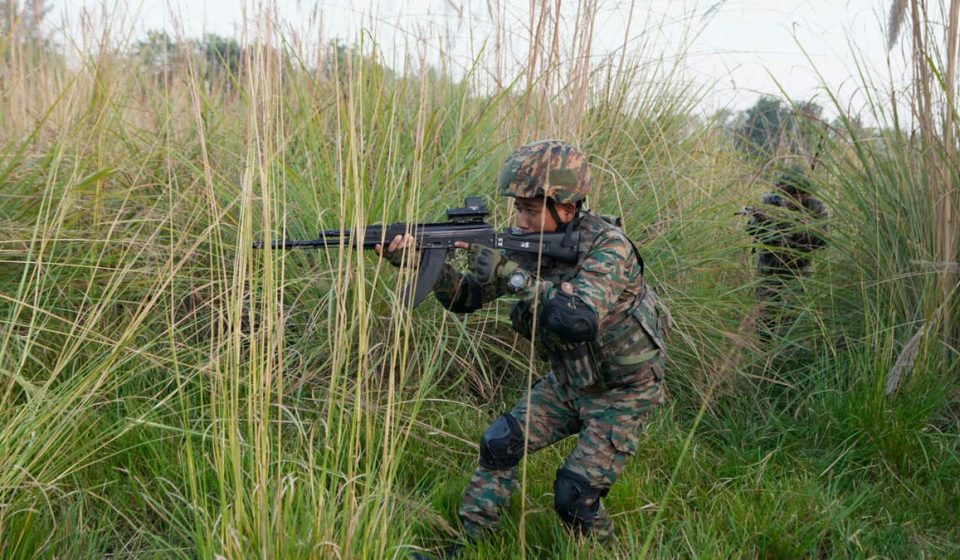

The Supreme Court has ruled that a soldier does not need to be hit by an enemy bullet to qualify for war injury pension, in a landmark verdict that widens protection for personnel hurt during operations. A two judge bench said soldiers injured by accident or by firing from their own side during an operation against the enemy are entitled to the enhanced pension.
The bench of Justice Satish Chandra Sharma and Justice N K Singh delivered the verdict in the case of Subedar Major and Honorary Lieutenant Devi Singh, setting aside an Armed Forces Tribunal order that had rejected his claim.
The case of Subedar Major Devi Singh
Devi Singh was injured in August 2002 in Jammu and Kashmir during Operation Rakshak and Operation Parakram. A bullet was accidentally fired from his own weapon and passed through his thigh, leaving him 40 percent disabled.
He was given the ordinary disability element of pension, but he was not treated as entitled to the war injury element, which carries enhanced benefits. He sought the higher pension, the tribunal rejected his claim, and he took the matter to the Supreme Court, which has now ruled in his favour.
What the bench ruled
The court said that to receive pension under the war injury element, it is not necessary for a soldier to have been wounded by an enemy bullet. If a soldier is injured during an operation by his own weapon or by firing from his own troops, he should still receive the pension.
The bench said such soldiers should be treated as wounded battle casualties, and a seriously injured soldier in such a case is entitled to the pension. The ruling covers injuries suffered while an operation against the enemy or militants is under way.
Two situations covered by the verdict
The court considered two situations in its order. The first is an injury caused by accident, such as a bullet or a splinter striking the soldier. The second is an injury caused by firing from his own soldiers. In both situations, the injury must have occurred during an operation against the enemy or militants.
The present case fell under the first situation, an accidental injury. The court made clear that both kinds of cases qualify for the war injury element of pension.
Self inflicted injury is different
The bench drew a clear line between accidental injuries and cases of self inflicted injury. In self inflicted cases, the court said, there is an element of deliberate or intentional action, and the person does not remain entitled to the enhanced pension benefits.
Accidental injuries during operations, by contrast, carry no such intent, and the court said they must be treated on the same footing as injuries caused by enemy fire.
How accidental firing can happen
The court also noted the ways in which a weapon can fire by accident during an operation. A soldier may trip or fall while holding a weapon, the trigger may get caught on something, accidental pressure may fall on the trigger, or a technical fault in the weapon may cause it to fire.
The verdict will matter for other soldiers in similar situations, as it settles that the source of the bullet is not the test. What matters is that the injury was suffered during an operation against the enemy, and that it was not a deliberate act.
Frequently Asked Questions
Does a soldier need an enemy bullet wound to get war injury pension?
No. The Supreme Court ruled that soldiers injured by accident or by friendly fire during operations against the enemy qualify for war injury pension, even without an enemy bullet.
Who was the soldier in this case?
Subedar Major and Honorary Lieutenant Devi Singh, who was injured in August 2002 in Jammu and Kashmir during Operation Rakshak and Operation Parakram and left 40 percent disabled.
How is this different from self inflicted injury?
The court said self inflicted injury involves deliberate or intentional action and does not qualify for enhanced pension, while accidental injury during an operation does qualify.