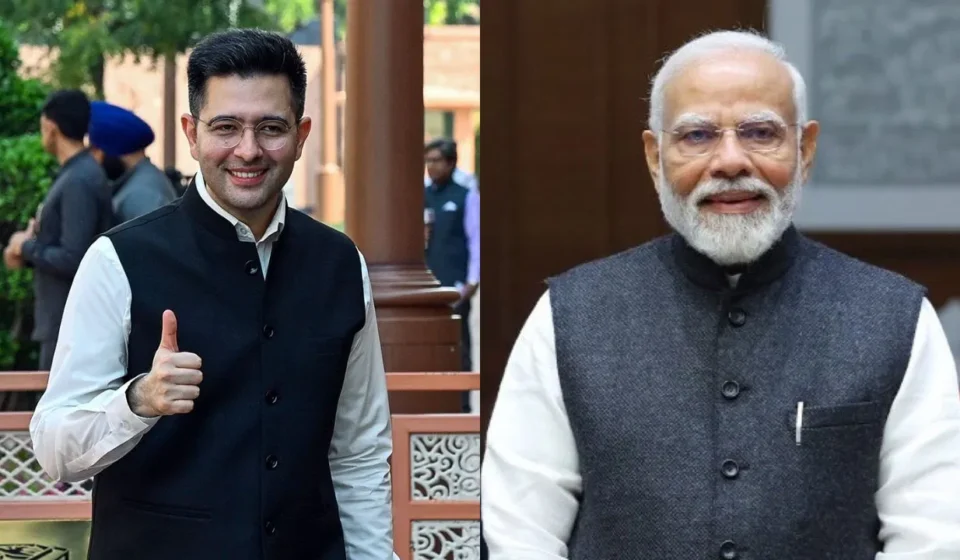

Prime Minister Narendra Modi has achieved a significant political milestone by becoming the longest continuously serving elected Prime Minister in India’s history. On June 10, Modi completed 4,399 uninterrupted days in office, surpassing the previous record held by India’s first Prime Minister, Jawaharlal Nehru.
The achievement drew praise from BJP Rajya Sabha MP Raghav Chadha, who said the milestone reflects the repeated trust that Indian voters have placed in Modi over the past decade. In a post on X, Chadha highlighted that Modi has received three consecutive mandates from the electorate through the 2014, 2019 and 2024 Lok Sabha elections.
According to Chadha, while both Nehru and Modi have left a lasting mark on Indian politics, the circumstances under which they secured public support were vastly different. He noted that Nehru governed during the early years of independent India when the Congress party enjoyed unmatched political dominance and faced limited opposition.
In contrast, Chadha described today’s political landscape as highly competitive, with strong regional parties, coalition politics and intense multi-party contests. He argued that winning successive elections in such an environment requires sustained public confidence and broad national support.
Modi first assumed office on May 26, 2014, after leading the Bharatiya Janata Party to a decisive victory in the general elections. He repeated the feat in 2019 with another majority and returned for a third term in 2024 as leader of the National Democratic Alliance (NDA).
Chadha said earning the trust of India’s diverse population once is a remarkable accomplishment, but maintaining that support across three consecutive elections is a rare political achievement. He also extended his best wishes to the Prime Minister, praising his commitment to public service and national development.
Nehru’s Legacy in Independent India
Jawaharlal Nehru served as Prime Minister from August 15, 1947, until May 27, 1964. During his nearly 17-year tenure, he led India through the challenges of nation-building following Independence and Partition.
His government dealt with refugee rehabilitation, economic reconstruction, food shortages and the integration of hundreds of princely states into the Indian Union. Nehru also guided the country through its first democratic elections and played a key role in shaping many of India’s institutions.
Political Context Behind the Comparison
The discussion around Modi’s record has sparked comparisons between different eras of Indian politics. While Nehru’s leadership came during a period of Congress dominance, Modi’s rise has taken place in an age marked by coalition politics and stronger regional representation.
The debate reflects how India’s political system has evolved over the decades, making electoral victories increasingly competitive and challenging. Modi’s latest milestone adds another chapter to his political journey as he continues to lead the country in his third consecutive term.