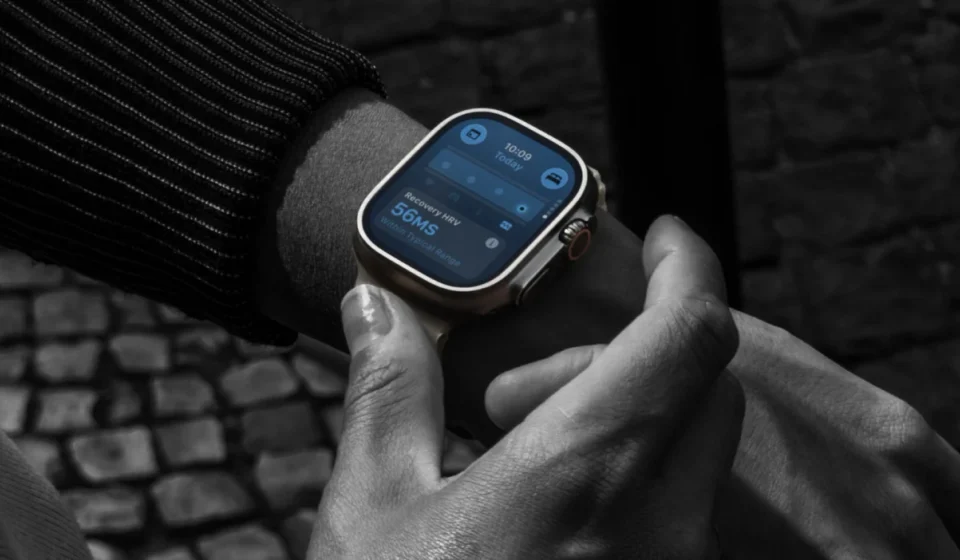

Apple has continued its Ultra smartwatch lineup with the new Apple Watch Ultra 4, focusing less on an exterior redesign and more on improvements to health monitoring, battery life and smart features.
The latest model retains the recognizable 49mm titanium body of earlier Ultra watches, but Apple has introduced a new heart-sensing system and a more capable S11 processor. Battery endurance has also received a notable boost.
The Ultra 4 starts at $799 and is aimed primarily at users who want advanced fitness tracking, outdoor capabilities and detailed health information from their wrist.
However, there is an important catch: some of the features announced alongside the watch won’t be available immediately.
Apple Watch Ultra 4 Specifications
Here are the main specifications of Apple’s latest Ultra smartwatch:
| Feature | Apple Watch Ultra 4 |
|---|---|
| Case | Titanium |
| Size | 49mm |
| Display | Wide-angle OLED, LTPO3 |
| Resolution | 422 × 514 pixels |
| Brightness | Up to 3,000 nits |
| Processor | S11 |
| Storage | 64GB |
| Connectivity | GPS, cellular, Wi-Fi, Bluetooth |
| Cellular | 5G and LTE |
| Battery | Up to 50 hours |
| Low Power Mode | Up to 84 hours |
| Charging | Up to 80% in about 45 minutes |
| Water resistance | 100 metres |
| Diving | Up to 40 metres |
| Dust resistance | IP6X |
| Case colours | Natural Titanium, Black Titanium |
Apple Keeps the Same Ultra Look
The Apple Watch Ultra 4 doesn’t attempt to reinvent the design.
The 49mm titanium case is essentially carried over from the previous generation, with Apple offering the watch in Natural Titanium and Black Titanium. The large display, rugged construction and prominent Digital Crown remain part of the package.
While some users may have expected a redesigned case, the existing Ultra design is already distinctive. Its large display is easy to read outdoors, while the titanium construction gives it the rugged appearance expected from an adventure-focused smartwatch.
For current Ultra owners, though, the similarities are immediately noticeable.
watchOS 27 Adds a New Siri Modular Face
One of the software changes arriving with the Ultra 4 is the Siri Modular watch face.
Rather than keeping the same central complication throughout the day, the watch face can automatically surface information from the Smart Stack. Rotating the Digital Crown allows users to cycle through additional widgets.
The Ultra 4 also gets some display-specific customization because of its larger screen.
Still, Apple’s decision to introduce only one major new watch face may leave some users wanting more. Watch faces are one of the easiest ways to give an otherwise familiar smartwatch a fresh appearance.
Battery Life Is a Big Step Forward
Battery endurance is arguably one of the most useful improvements in the Apple Watch Ultra 4.
Apple claims up to 50 hours of normal use, compared with shorter endurance on earlier Ultra generations. Low Power Mode can extend battery life to as much as 84 hours.
For outdoor workouts, Apple rates the watch for up to 18 hours.
This matters most for people who use their watch continuously for activities such as hiking, cycling, running or endurance events. Longer battery life also makes weekend travel easier because the charger doesn’t need to be used as frequently.
Charging remains relatively quick, with Apple claiming approximately 80% charge in 45 minutes.
Heart-Rate Tracking Gets New Hardware
The biggest hardware change is hidden underneath the case.
The Ultra 4 uses Apple’s updated Health Sensing System, combining a new optical heart sensor with a second-generation electrical heart sensor.
The system is capable of collecting heart-rate information more frequently. That additional data can then contribute to measurements such as heart-rate variability and other health-related insights.
Apple has promoted the new system as highly accurate, although independent testing over a longer period will be needed to determine how it compares with competing wearables across different activities and users.
Readiness Helps Users Understand Their Training
Another health-focused addition is Readiness.
The feature analyzes information collected by the watch and is designed to help users understand how prepared their body may be for physical activity.
Readiness doesn’t immediately generate a result. The watch needs approximately a week of data before it can begin providing the feature’s insights.
The updated sensing hardware also contributes to more detailed information in Apple’s health and fitness apps.
For example, users can monitor how quickly their heart rate drops after an intense workout, providing another way to understand recovery.
More Detailed Step Tracking
Apple has also updated step tracking on the Ultra 4.
The company says its latest system offers improved accuracy, although differences between the Ultra 4 and older Apple Watch models don’t necessarily prove that every measurement is more accurate.
A new Steps complication is also available, giving users an easy way to monitor their daily step count without opening a dedicated application.
AI Features Will Arrive Gradually
The Ultra 4’s S11 chip also enables Apple’s new collection of audio-focused intelligent features.
These include Music Recognition, Sound Recognition, Live Rewind and Siri Recap.
Music Recognition and Sound Recognition are available first, while some of the more advanced features are scheduled for a later release.
Faster Music Recognition
The Music Recognition feature can identify songs playing around the user. In testing, it can recognize tracks quickly, including less familiar versions and remixes.
It’s a relatively small feature, but one that could prove useful in everyday situations.
Sound Recognition
Sound Recognition is intended to identify important sounds in the user’s surroundings.
Examples include:
- Emergency sirens
- Doorbells
- A baby crying
- Other potentially important environmental sounds
The feature is particularly relevant to users who may not easily hear these sounds themselves.
Live Rewind and Siri Recap
Two of the more interesting additions are still waiting for their full release.
Live Rewind is designed to provide an AI-generated recap of the previous few seconds, potentially helping users recall something they have just heard.
Siri Recap, meanwhile, is designed to summarize aspects of the user’s day.
Apple says privacy has been considered in the design of these features and that captured audio isn’t stored. Live Rewind also provides visible and audible indicators when it is being used.
The real-world usefulness of these features will become clearer once they are broadly available.
Apple’s Health App Is Getting a Redesign
The Apple Watch experience is closely tied to Apple’s Health app on the iPhone.
With iOS 27, Apple is introducing a redesigned Health experience intended to make information easier to understand. Health data relating to areas such as sleep, fitness, heart health and vital signs can be presented in a more organized way.
Because the redesigned app is still being rolled out alongside the new software, its full impact will require further testing.
Apple Watch Ultra 4: Who Should Consider It?
The Ultra 4 isn’t necessarily designed for everyone.
Someone who primarily uses an Apple Watch for notifications, calls, basic activity tracking and occasional workouts may find that an older Ultra model already provides most of what they need.
The new model is more relevant to serious fitness users, endurance athletes and outdoor enthusiasts who can benefit from additional battery capacity and more frequent heart-rate monitoring.
The upgrade case is less straightforward for people who already own a recent Ultra. The physical design is largely unchanged, while several of the new software capabilities are still arriving.
Final Thoughts
The Apple Watch Ultra 4 is an example of Apple refining an established product instead of completely redesigning it.
Its biggest improvements aren’t immediately visible. The new heart-monitoring hardware, longer battery life and S11 processor make the watch more capable while the familiar titanium body remains largely unchanged.
The 50-hour battery rating is particularly useful for users who spend long periods away from a charger, while the enhanced health sensors could make the Ultra 4 more valuable to people who closely follow their fitness and recovery data.
The main question is how much value the upcoming software and AI features will ultimately add.
For someone buying an Ultra for the first time, the combination of rugged hardware, extended battery life and advanced health tracking makes the Ultra 4 a notable option. For existing Ultra owners, the decision is more dependent on whether the improved battery and health capabilities justify upgrading from their current model.