Vikram-1 Success: India’s First Private Orbital Rocket Opens a New Chapter in Space Exploration

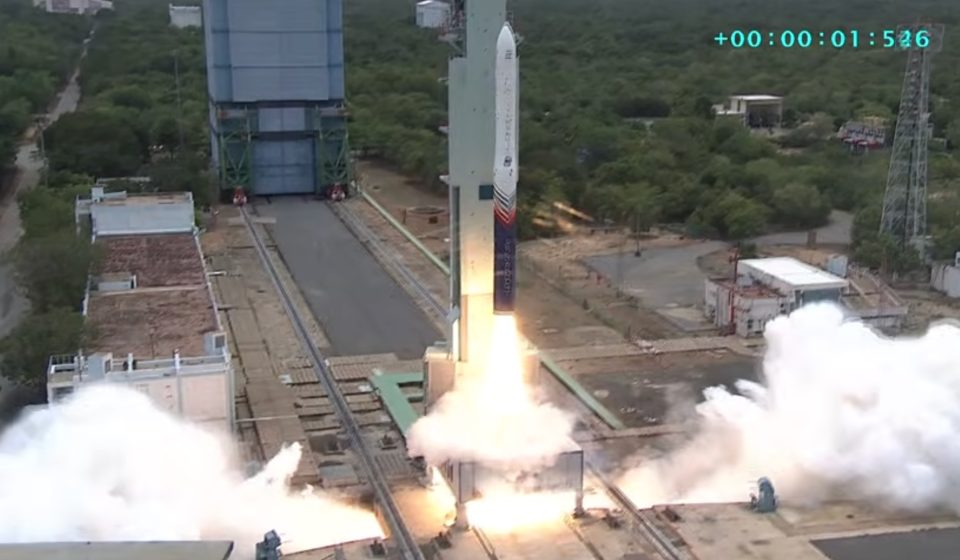
India achieved a major breakthrough in its space journey on July 18, 2026, as Skyroot Aerospace successfully launched Vikram-1, the country’s first privately developed orbital rocket. The historic mission, named Mission Aagaman, successfully placed multiple technology demonstration payloads into Low Earth Orbit (LEO), marking a significant milestone for India’s growing private space industry.
The successful launch demonstrates that Indian private companies are now capable of building and operating orbital-class launch vehicles, paving the way for future commercial satellite missions.
Mission Aagaman Successfully Lifts Off from Sriharikota
Vikram-1 lifted off from the Satish Dhawan Space Centre in Sriharikota at 12:05 PM IST after a brief delay caused by a planned hold during the final countdown.
The rocket’s automated launch sequence was temporarily paused to complete additional system checks before engineers cleared the vehicle for launch. Once all parameters were confirmed, the countdown resumed and the rocket lifted off smoothly.
The mission completed its planned flight profile, successfully deploying all onboard demonstration payloads into the intended orbit.
A Milestone for India’s Private Space Industry
The launch represents one of the biggest achievements for India’s commercial space sector since private companies were allowed to participate in launch activities.
With Vikram-1’s success, India joins a small group of countries where a privately developed orbital launch vehicle has successfully reached space. The achievement reflects years of innovation by Indian startups working alongside the country’s expanding space ecosystem.
What Makes Vikram-1 Special?
Designed and developed by Skyroot Aerospace, Vikram-1 is an advanced small satellite launch vehicle built using modern manufacturing techniques.
Some of its key features include:
- 22-metre-tall launch vehicle
- Three-stage solid propulsion system
- Liquid Orbital Adjustment Module
- Lightweight all-carbon composite structure
- Indigenous propulsion systems
- Fully 3D-printed rocket engine technology
- Payload capacity of up to 350 kg to Low Earth Orbit
The vehicle has been designed for rapid production and frequent launches, helping reduce costs for commercial satellite customers.
Technology Demonstration Mission
Mission Aagaman was primarily designed to validate the rocket’s performance during its first orbital flight.
Several experimental payloads flew onboard, including technology demonstrations from Indian startups and international partners.
The mission carried:
- Solaras Satellite by Grahaa Space
- SCOPE Satellite developed by Skyroot Aerospace
- Embrace payload from Cosmoserve Space
- uD3PP and mD3RN payloads by Germany’s DCubed
- Cosmic Bloom space artwork
- A miniature tribute artwork crafted by Ajay Kumar Mattewada
The rocket also carried hundreds of commemorative postcards contributed by people from around the world, including a handwritten message from Prime Minister Narendra Modi.
Flight Lasted Nearly 16 Minutes
According to Skyroot Aerospace, Vikram-1 completed its orbital mission in approximately 15 minutes and 46 seconds.
Throughout the flight, engineers monitored multiple stages of the mission, including:
- Liftoff
- Stage separations
- Vehicle guidance
- Orbital insertion
- Payload deployment
The flight also generated valuable engineering data that will be used to improve future launch vehicles.
Prime Minister Congratulates Skyroot Aerospace
Following the successful mission, Prime Minister Narendra Modi congratulated the Skyroot Aerospace team during a phone conversation with co-founder and CEO Pawan Kumar Chandana.
The Prime Minister described the launch as a defining achievement for India’s space ambitions and said that the increasing role of private companies will accelerate innovation while inspiring young scientists and entrepreneurs across the country.
Why Vikram-1 Matters
The success of Vikram-1 extends beyond a single rocket launch.
It signals that India is becoming an important destination for affordable satellite launches and advanced aerospace manufacturing. As demand for small satellite deployment continues to grow worldwide, Indian private launch providers could play a significant role in the global market.
The mission also strengthens collaboration between ISRO, IN-SPACe, and private aerospace companies, creating new opportunities for research, innovation, and commercial space missions.
What’s Next for Skyroot Aerospace?
Skyroot Aerospace has confirmed that Mission Aagaman is the first step in its long-term launch program.
The company plans to carry out additional orbital demonstration flights before beginning regular commercial launches for domestic and international customers.
The experience gained from Vikram-1 will help refine future launch vehicles, improve mission reliability, and increase launch frequency.
Conclusion
The successful launch of Vikram-1 is a defining moment for India’s private space sector. By proving that a privately developed Indian rocket can successfully reach orbit, Skyroot Aerospace has opened the door to a new era of commercial spaceflight.
As India’s space ecosystem continues to expand, Mission Aagaman will be remembered as the mission that transformed the country’s private space ambitions into reality.