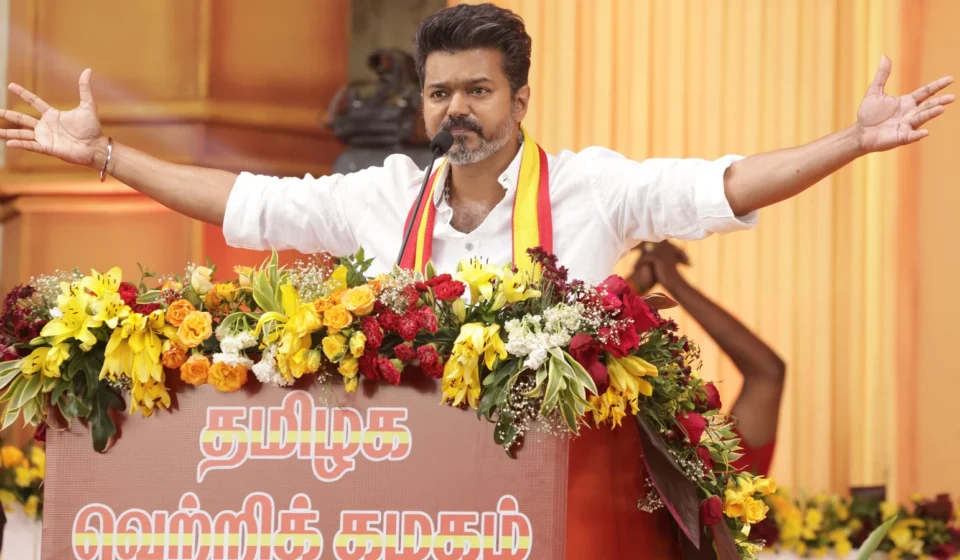
Vijay Political Masterstroke: TVK’s 108-Seat Haul Reshapes Tamil Nadu’s Future

Tamil Nadu’s political landscape underwent a dramatic transformation on Monday as film superstar C. Joseph Vijay’s Tamilaga Vettri Kazhagam (TVK) stunned the establishment by clinching 108 seats in the 234-member state assembly. Falling just 10 seats short of the majority mark of 118, Vijay’s party has effectively ended the decades-long duopoly of DMK and AIADMK, drawing parallels to M.G. Ramachandran’s groundbreaking 1977 victory when he broke from DMK to seize power as chief minister. This “fun” superstar’s rise from reel hero to real kingmaker has fans celebrating with whistles—the party’s symbol—and giant cutouts, while rivals scramble.
Vijay’s Charisma Conquers: From Fan Clubs to Assembly Dominance
Vijay, with nearly 70 films under his belt including hits that defined Tamil mass cinema, didn’t just ride stardom—he built it brick by brick. Starting in 2009, he reorganized fan clubs into Vijay Makkal Iyakkam, a grassroots welfare network delivering neighborhood aid, education support, and disaster relief. By 2011, it dipped into politics by backing an AIADMK alliance, gauging fandom’s vote potential. Over the years, Vijay’s film events evolved into platforms railing against exam stress, youth unemployment, corruption, and even the controversial 2019 Citizenship Amendment Act.
Launching TVK formally in 2024 marked his full pivot, but a tragic setback hit last year: dozens died in a crush at a rally, drawing criticism over his response. Voters moved past it, forgiving the star who promised change. Post-voting, Vijay’s temple and church visits—flashing across TVs and phones—strategically blended faith with his image in a state shaped by rationalist Self-Respect ideals. Social scientist Shiv Visvanathan praises his “verve”: a mix of fun, confidence, and individuality that offers “a different kind of power.”
Youth, Women Drive TVK Wave Amid Dravidian Fatigue
Pollster Pradeep Gupta highlights TVK’s edge with 18-39-year-olds (42% of voters), first-timers, women, and cross-caste groups like Scheduled Castes and OBCs. Strategist Prashant Kishor calls Vijay “Tamil Nadu’s new hope.” Despite the state’s stellar 11.2% growth in 2024-25, robust manufacturing, and top social metrics, legacy parties felt jaded. DMK under MK Stalin and AIADMK’s splinters couldn’t counter TVK’s fresh messaging on jobs, anti-corruption, and Tamil pride amid water feuds with Karnataka and Chennai floods.
Unlike Rajinikanth, who flirted but folded, or Kamal Haasan, whose party fizzled, Vijay’s timing shines. Vocalist TM Krishna views it as “stirring imagination”—not rejecting Dravidian social justice roots, but injecting renewal. Party spokesperson Felix Gerald sums it: “People are tired of both majors; TVK is the change.” Vijay positions BJP as ideological foe while targeting DMK directly, leveraging Tamil Nadu’s regional resistance.
Coalition Chess and Policy Hurdles: Vijay’s Next Act
With 108 seats, Vijay shifts to deal-making: courting independents and minors for those crucial 10. His final film Jana Nayagan (People’s Leader), eyed for a January release as his acting swan song, stalls in certification battles despite court intervention. Critics like Nilakantan RS flag “thin policies” and “virality over substance,” questioning if temple optics signal image-driven rule. Yet Vijay’s disciplined machine—tech-savvy youth wings—suggests governance chops, eyeing Coimbatore tech boosts, resilient infra, and skill programs.
Vijay’s not just winning seats; he’s redefining power in India’s cinema-politics nexus.